With the new fiscal year that began on July 1st, 2025, citizens across Nebraska, Iowa, and South Dakota are starting to feel the shift brought by the latest tax laws. Here in Nebraska, these changes are more than just headlines. They affect the way we work, do business, and plan for the future.
The Nebraska Legislature’s provisions will lead to salary increases for many workers, new policy requirements for employers, and additional property tax relief for some residents. But that’s not the whole picture. Taxes will now be collected on the revenue generated by skilled gaming kiosks, a move driven by their growing popularity across the state.
As someone who works with Nebraska businesses and families every day, I know these changes can bring both opportunities and challenges. For some, the updates may mean more money in their pockets. For others, new compliance obligations could add to the workload. The real question for Nebraska citizens is whether these changes will benefit you or be a burden on your lifestyle.
What 2025 Tax Changes Went into Effect?
Annual adjustments to state tax laws commonly occur on July 1st at the state, county, or city level.
Here are the general Nebraska-specific changes that went into effect in 2025:
- Colleges must report any funding. Any contracts, gifts, or grants received from foreign adversaries must be reported by both public and private colleges and universities in Nebraska.
- State salaries increase. The new State of Nebraska contract allows employees with satisfactory performance evaluations for the years 2024 and 2025 to receive a salary increase. The higher pay will be adjusted between the range of 6.5-20%. The minimum wage has also been increased to $15 an hour, along with the increasing paid maternity leave to six weeks for FMLA eligible mothers.
- Tax Policy Updates. There is a new taxation structure for gaming machines, creating new tax burdens for businesses that didn’t exist before.
- However, individual income tax rates have been reduced to 5.20% and will continue dropping through 2027, a clear benefit to Nebraska residents.
- Tax Credit Modifications. In addition to these tax changes, there will be an increase in the following tax credits:
- The limit for charitable pregnancy organizations shifted to $500,000, and in 2026 will increase to $1 million annually.
- The limit for intellectual and developmental disability tax credits changed to $1 million in 2025 and is set for $1.5 million in 2026.
- The cap on disbursements for the caregiver tax credit moves to $1.5 million for the next two years, followed by a raise to $2.5 million.
Current law allows tax credit donations throughout the entire year even if they went above the donation threshold. With the new provisions, no additional credit can be allowed after the limit is attained. This creates a system that requires earlier planning for maximum tax benefit.
Following these changes to taxes, Nebraska’s Department of Revenue announced that the fiscal year ended $86 million below expected tax revenues. Nebraska’s decrease in income tax rates could have contributed to lower revenues.
What Does Revenue Shortfall Mean for Nebraska Citizens?
This revenue shortfall has put Nebraska back into a projected budget deficit which carries several implications for residents:
- Service Reductions: State services may face cuts or reduced funding to balance the budget.
- Tax Policy Reversals: Future tax reduction plans could be delayed or modified.
- Increased Reliance on Other Revenue Sources: The state may need to lean more heavily on property taxes, sales taxes, or fees.
- Budget Uncertainty: Long-term planning becomes more challenging for both the state and taxpayers.
Nebraska’s current situation suggests the rate reductions may have exceeded the state’s ability to maintain revenue through economic expansion.
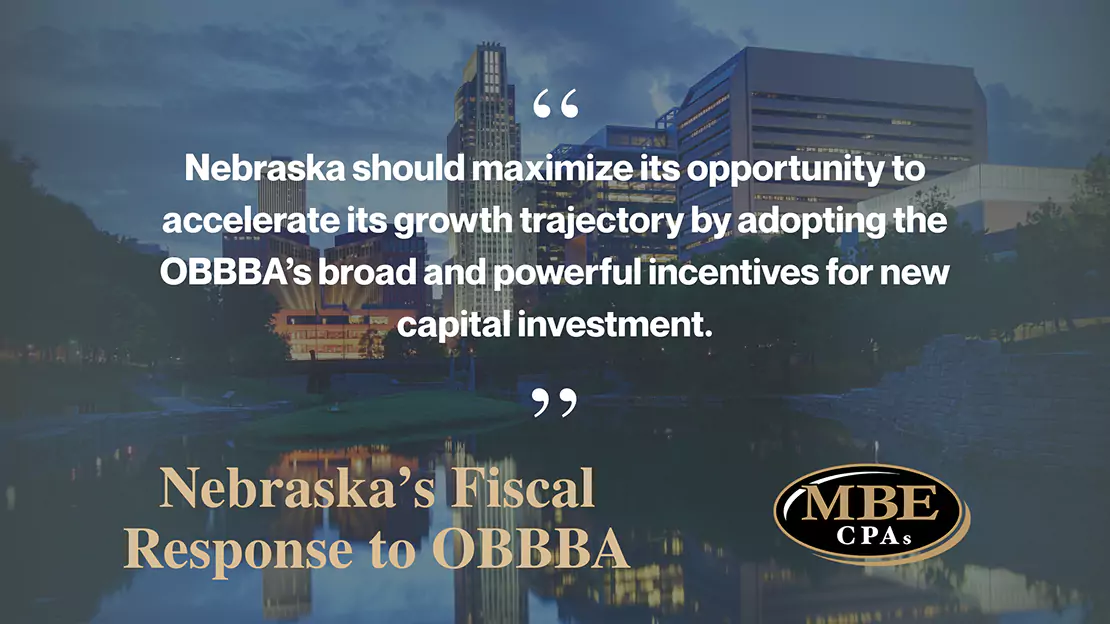
Moving forward, policymakers must decide whether to adopt individual changes from the ‘One Big Beautiful Bill Act,’ as these changes are temporary and can attract reshoring investments. Specifically, OBBBA made changes to the business tax code that will have a greater state impact and will require additional consideration.
How Are Nebraska’s Property Taxes Impacted?
The legislative changes that are impacting Nebraska’s taxes also cover property taxes, all of which became effective on July 1, 2025. The new state laws represent a shift in local government budgeting.
Last year, the state law The Property Tax Growth Limitation Act placed restrictions on how much cities can increase property taxes each year. This law went into effect on July 1, increasing the amount of available relief via property tax credits from $750 million to $780 million.
For more specific tax exemptions, LB209 clarifies property tax exemption for nursing and assisted-living facilities. Additionally, there is 100% exemption for total disability compensation under the Homestead Program. These homestead tax exemptions are expanded for veterans and their surviving spouses.
Unfortunately, Nebraska farmers were not included in the property tax relief revisions. It is likely that producers and homeowners will pay more in property taxes next year. Bill LB170 had failed to advance, which would have provided more than $100 million per year by eliminating sales tax exemptions.
As the costs are being shifted to local government, Nebraska citizens may consider keeping an eye on the ebb and flow of property taxes.
What Nebraska Businesses Should Know About Gaming Tax
One of the most notable 2025 tax changes is the introduction of Nebraska gaming taxes on skilled gaming kiosks. This new revenue stream will affect various businesses, from restaurants hosting the kiosks to the gaming machine operators.
Here are the new compliance requirements:
- Monthly reporting of gaming revenue
- Proper record-keeping for all gaming transactions
- Tax remittance schedules aligned with state requirements
To maintain compliance with the new state taxes, businesses must establish separate revenue tracking and ensure accurate reporting of such revenue. Maintaining detailed records and proper internal controls will help the business manage cash and aid in the audit process.
Effortless Bookkeeping Starts Here
MBE CPAs Guide for Nebraska Businesses & Residents
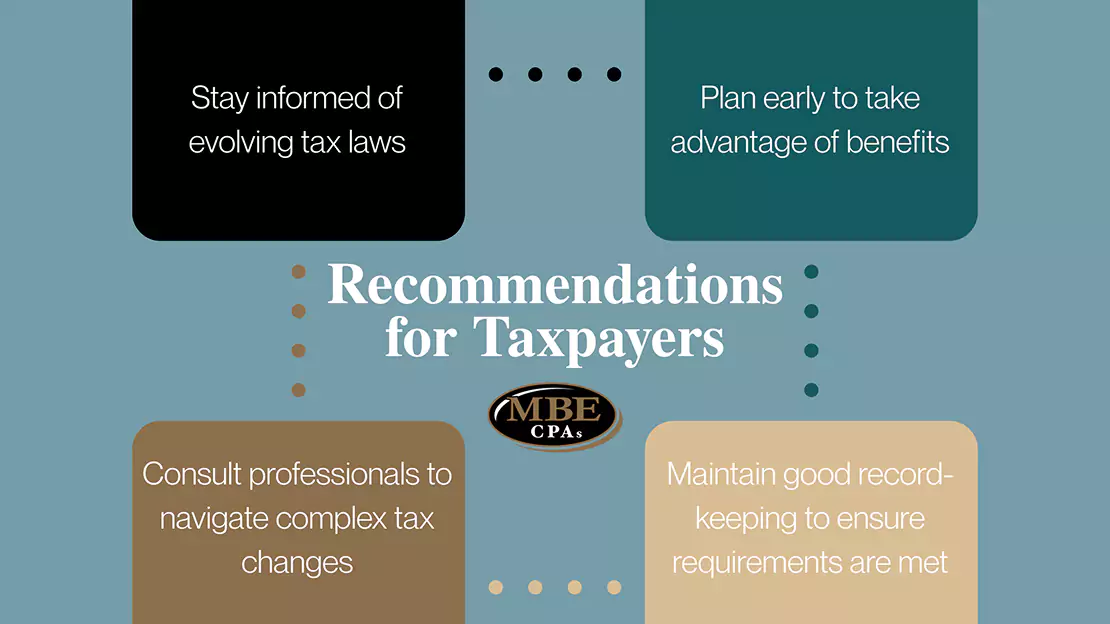
Nebraska’s multi-year plan to reduce individual tax rates creates new opportunities for strategic planning. For state residents, guided tax planning can be implemented to recognize all eligible benefits.
Specific tax planning objectives include the following points:
- Consider the timing of income: Optimize retirement distribution strategies and evaluate business structures to take advantage of decreasing rates.
- Proper business structure planning: Focus on accurate credit memo processing, delayed credit tracking, and refund management to maintain compliance with all tax obligations.
In addition to retirement and structure planning, utilizing proper QuickBooks methods will help you confidently manage your business’s accounting.
At MBE, our CPAs do more than simply point you in the right direction. They actively help you navigate tax changes and compliance requirements. We specialize in assisting businesses with selecting the right accounting software and managing their bookkeeping. Our professional advisory services also help clients assess and adjust their business structure in light of ongoing changes.
We provide the following advisory services to our clients:
- Review property tax situations for savings opportunities
- Assess gaming tax compliance for hospitality clients
- Evaluate business structures considering income tax rate changes
- Quarterly planning considerations, such as monitoring tax credit utilization throughout the year and adjusting estimated tax payments for rate changes
Mastering basic bookkeeping is crucial for success. Choose an accounting firm that understands your small business’ needs.
Conclusion
Nebraska’s 2025 tax law changes represent an approach to taxation and revenue generation that will allow some taxpayers to benefit from tax relief, while others face new compliance requirements. Business owners who operate gaming machines will feel the new tax burden, illustrating the importance of professional guidance.
Understanding how these tax modifications affect your specific situation will allow you to take appropriate action when it comes to maintaining full tax compliance.
We recommend working with one of our qualified tax advisors to develop strategies aligned with your goals in mind. Let us help you create a plan you can approach with confidence and peace of mind.